Showing posts with label Swainson's Thrush. Show all posts
Showing posts with label Swainson's Thrush. Show all posts
June 14, 2013

September 22, 2012
Hartley Nature Center
I went over to the Hartley Nature Center yesterday for a run, but then ended up birding around a bit beforehand. I mostly saw a lot of sparrows, including Song, Lincoln's, Swamp, White-throated, White-crowned, and my first Fox of the year.
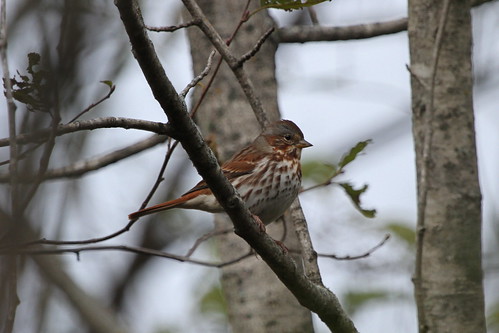
Red Fox Sparrow, strikingly different from the Sooty, seen here.
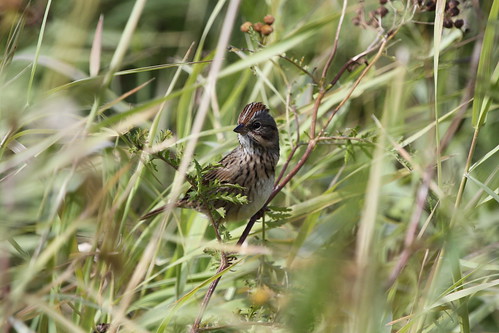
Lincoln's were probably second to White-throated in number.
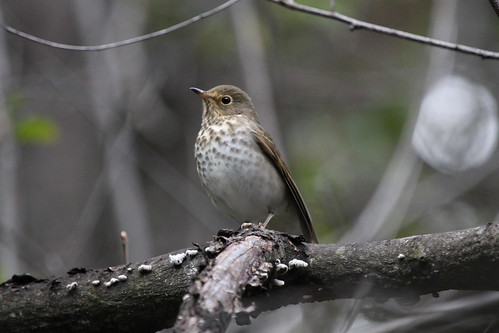
There were also a few thrush kicking around with the Catbirds, eating berries, including this Swainson's Thrush.
Red Fox Sparrow, strikingly different from the Sooty, seen here.
Lincoln's were probably second to White-throated in number.
There were also a few thrush kicking around with the Catbirds, eating berries, including this Swainson's Thrush.
July 24, 2011
HETH v SWTH
We just caught our first hermit thrush of the season! While they are quite common during the winter, they don't breed here at palo. We do hear them over the hill occasionally, but never catch adults until the breeding season is over. This juvenile was a surprise at the net, as it was noticeably smaller than our usual thrush and after taking a look at the wing, we realized why. Compared to the swainson's thrush, which weighed ~29 grams, this guy was ~20 grams.
On the bird on the left, the fourth flight feather from the end of the wing is longer than the outer most feather, as well as emarginated, making it a hermit thrush. On the bird on the right, the fourth feather from the end of the wing is shorter than the outer most feather, and is not emarginated, making it a swainson's thrush.
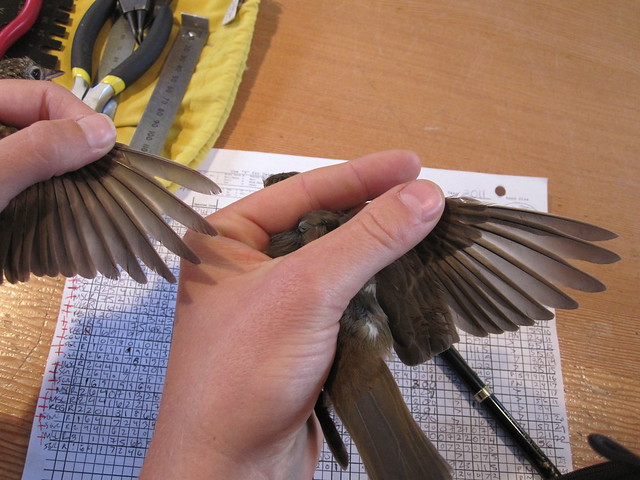
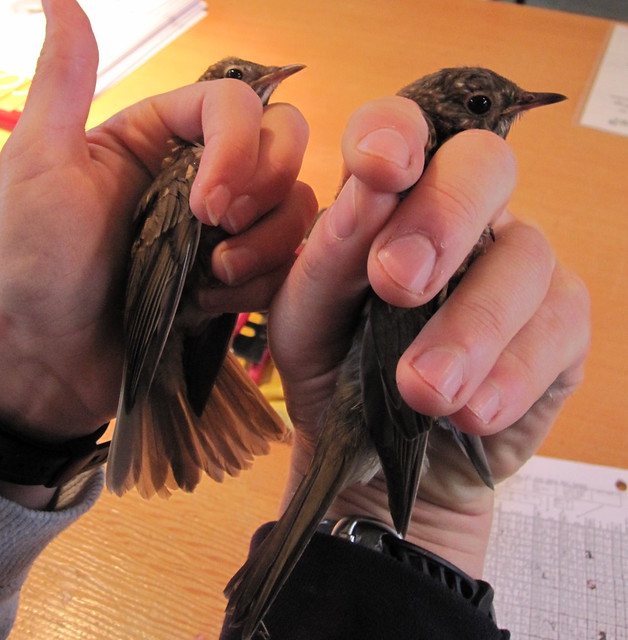
On the bird on the left, the fourth flight feather from the end of the wing is longer than the outer most feather, as well as emarginated, making it a hermit thrush. On the bird on the right, the fourth feather from the end of the wing is shorter than the outer most feather, and is not emarginated, making it a swainson's thrush.
July 9, 2011

June 15, 2011
Lovely Lagunitas
Good day banding at Lagunitas Creek. We caught over 20 birds, including a very stunning pair of Lazuli buntings.
Male

Female

We also had around 5 robins, a couple of which were juveniles like this one

As well as a deformed swainson's thrush
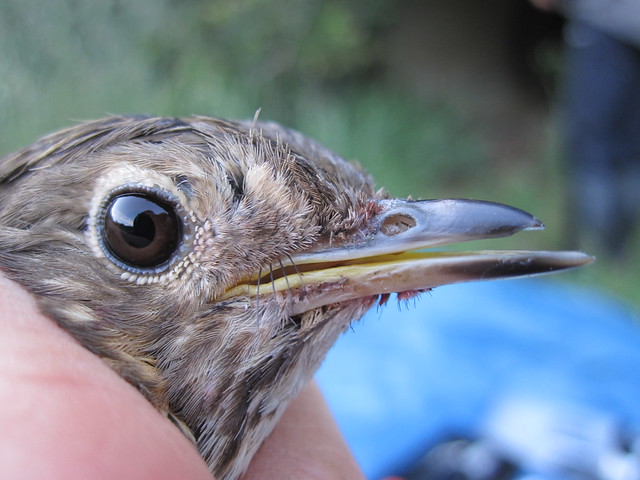
And some feather lice

Male

Female

We also had around 5 robins, a couple of which were juveniles like this one

As well as a deformed swainson's thrush
And some feather lice

June 5, 2011

May 18, 2011
Geolocator tags, 5 and counting
In February 2010 ~33 geolocator tags were harnessed (with Kevlar string, making sort of a backpack) to wintering golden-crowned sparrows here at Palo and a near by location. In June 2010 35 tags were attached to breeding Swainson's thrush between three sites (Palo, Pine Gulch, and Muddy Hollow).
Here's a short description (from the seller) of what the tag's function:
"Our light level geolocator is an instrument used to record the flight paths of migrating animals; particularly birds. British Antarctic Survey (BAS) engineers originally developed the instrument for recording the behaviour of the Wandering Albatross. The device records the change in light levels at different latitudes and longitudes, enabling scientists to determine where the bird has been. Animal recapture is necessary to retrieve the device as it is an archival logger. Information is recovered by downloading the data from the logger for analysis. Using low power technology and data compression the device is able to record data for many years."
In the fall we retrapped ~11 sparrows that were fixed with tags, but only retrieved the low number four tags, as we ran into the problem of tags having been bitten off by the strong seed-crushing sparrow bills...sad, indeed.
Within the last three weeks we have seen the arrival of the Swainson's thrush and have since retrieved 5 tags! Three at Muddy Hollow (one today!), one at Palo today, and our first at Pine Gulch. It seems as though the tags have stayed on these birds much better, and it makes sense, as their bills are much better fitted for picking at insects and eating berries. It's pretty exciting to know that there are still 30 tags out there and we are seemingly likely to get many more.
After returning to the banding station with the bird in a bag, Amanda and I decided to play it safe by removing the tag from within the confines of my car (in case there was an accidental release)...
Excitement

Swainson's thrush with one color band and one silver

Attached geolocator

Cutting the tag off

Success!

Here's a short description (from the seller) of what the tag's function:
"Our light level geolocator is an instrument used to record the flight paths of migrating animals; particularly birds. British Antarctic Survey (BAS) engineers originally developed the instrument for recording the behaviour of the Wandering Albatross. The device records the change in light levels at different latitudes and longitudes, enabling scientists to determine where the bird has been. Animal recapture is necessary to retrieve the device as it is an archival logger. Information is recovered by downloading the data from the logger for analysis. Using low power technology and data compression the device is able to record data for many years."
In the fall we retrapped ~11 sparrows that were fixed with tags, but only retrieved the low number four tags, as we ran into the problem of tags having been bitten off by the strong seed-crushing sparrow bills...sad, indeed.
Within the last three weeks we have seen the arrival of the Swainson's thrush and have since retrieved 5 tags! Three at Muddy Hollow (one today!), one at Palo today, and our first at Pine Gulch. It seems as though the tags have stayed on these birds much better, and it makes sense, as their bills are much better fitted for picking at insects and eating berries. It's pretty exciting to know that there are still 30 tags out there and we are seemingly likely to get many more.
After returning to the banding station with the bird in a bag, Amanda and I decided to play it safe by removing the tag from within the confines of my car (in case there was an accidental release)...
Excitement

Swainson's thrush with one color band and one silver

Attached geolocator

Cutting the tag off

Success!

May 4, 2011
Redwood Creek
Today was our first day banding at one of our summer/fall offsites. It was a beautiful day, we had an easy set up (@6:25) and caught 30 birds in total.
We caught our first Swainson's thrushes today (5 of them), and got some good practices learning their calls for the first time.

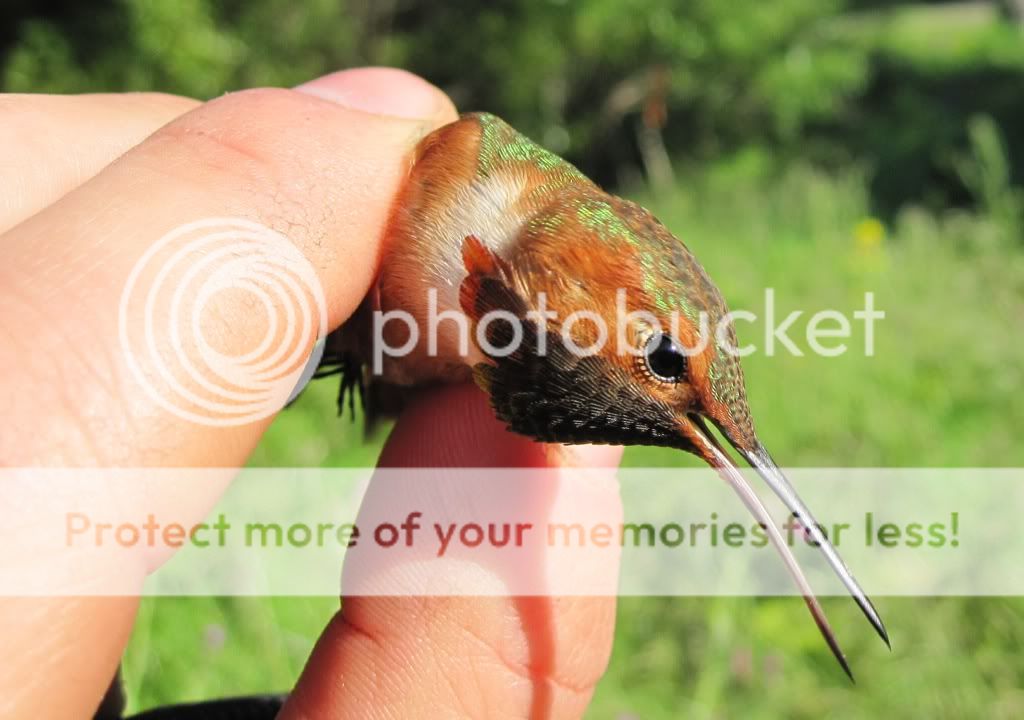
Also our first adult male Allen's


"banding lab"


Rainpants next time

We caught our first Swainson's thrushes today (5 of them), and got some good practices learning their calls for the first time.

Also our first adult male Allen's


"banding lab"


Rainpants next time

Subscribe to:
Posts (Atom)


